Digital event branding plays a critical role in optimizing your event attendees’ journeys. It helps you build recognition, establish authority, and communicate your organization’s key messages.
However, developing a comprehensive branding strategy for the entire event can be time-consuming and complex. In several presentations during the INSIGHT 2025 conference, RainFocus product experts addressed this challenge with a range for best practices for optimizing event design.
Whether or not you are currently using RainFocus to design your digital event experience, consider these seven guiding principles for efficient event branding:
- Understand the purpose of the event. From vision to design, your event’s purpose shapes every element of your event experience, including branding. Different goals, such as establishing thought leadership, building your community, or generating brand awareness, each require different approaches. A good place to begin is aligning with stakeholders to understand their needs, and then designing your event accordingly.
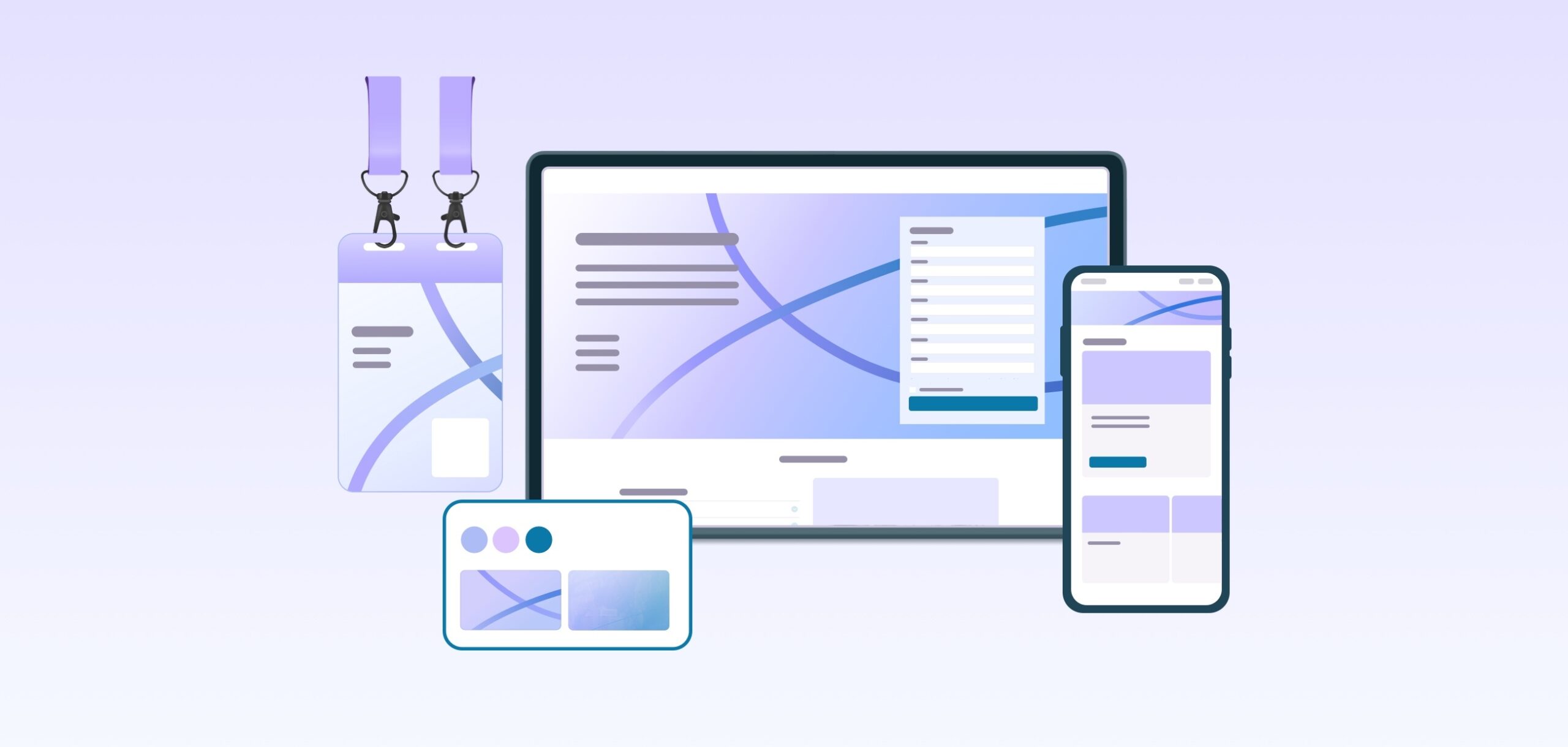
- Keep your layout consistent across all web pages. As a rule of thumb, elements such as button placement and sidebars should remain uniform from one event page to the next. This consistency makes it easier for attendees to navigate your experience.
- Build event branding to last. When possible, design elements that can be repeated year after year. Examples include registration forms, thank-you pages, content catalogs, and digital signage. Doing so will create a familiar experience for return attendees.
- Adopt a “series” mindset rather than focusing on single events. Strengthen your brand presence by creating a recognizable identity across all your events. Ask, “How will this design scale?” Create templates that provide value across different teams. Consider applying consistent branding elements from large events to smaller events to save time across the event portfolio.
- When using custom code, employ CSS variables and web components. CSS variables are lines of code that, when changed, will apply across your website. These might include primary and secondary colors, fonts, or other brand elements. Applying them can reduce branding complexity and developer overhead.
- Prioritize simplicity. Just because webpages can be customized to look a certain way, that doesn’t mean they always need to be. Aim to reduce security risks and tech debt by using available tools to build simple, intuitive experiences for attendees. Overly designed websites take more time to create and maintain, and they can confuse attendees.
- Think of your event as part of a larger customer journey. Beyond events, seek to establish consistent brand standards across all of your marketing platforms. This encourages a unified brand experience for customers and prospects.
We’ve covered seven keys to optimizing your digital event branding, but why is all of this so crucial right now? As our speakers emphasized at INSIGHT, we’re in a digital era in which attendees expect intuitive design. Your event branding should feel like a natural extension of their daily online routine. As you fine-tune your digital event branding, you’ll improve attendees’ experiences, build recognition year after year, and be better equipped to meet your event goals.